
5G Network
5G explained
5G is the 5th generation mobile network. It is a new global wireless standard after 1G, 2G, 3G, and 4G networks. 5G enables a new kind of network that is designed to connect virtually everyone and everything together including machines, objects, and devices.5G wireless technology is meant to deliver higher multi-Gbps peak data speeds, ultra low latency, more reliability, massive network capacity, increased availability, and a more uniform user experience to more users. Higher performance and improved efficiency empower new user experiences and connects new industries.
There are several companies within the mobile ecosystem that are contributing to bringing 5G to life. Qualcomm has played a major role in inventing the many foundational technologies that drive the industry forward and make up 5G, the next wireless standard.
There are some few underlying technolgies that makes up 5G, which are interface to the service layer. Other 3GPP 5G members range from infrastructure vendors and component/device manufacturers to mobile network operators and vertical service providers.
5G is based on OFDM (Orthogonal frequency-division multiplexing), a method of modulating a digital signal across several different channels to reduce interference. 5G uses 5G NR air interface alongside OFDM principles. 5G also uses wider bandwidth technologies such as sub-6 GHz and mmWave.
Like 4G LTE, 5G OFDM operates based on the same mobile networking principles. However, the new 5G NR air interface can further enhance OFDM to deliver a much higher degree of flexibility and scalability. This could provide more 5G access to more people and things for a variety of different use cases.
5G will bring wider bandwidths by expanding the usage of spectrum resources, from sub-3 GHz used in 4G to 100 GHz and beyond. 5G can operate in both lower bands (e.g., sub-6 GHz) as well as mmWave (e.g., 24 GHz and up), which will bring extreme capacity, multi-Gbps throughput, and low latency.
5G is designed to not only deliver faster, better mobile broadband services compared to 4G LTE, but can also expand into new service areas such as mission-critical communications and connecting the massive IoT. This is enabled by many new 5G NR air interface design techniques, such as a new self-contained TDD subframe design.
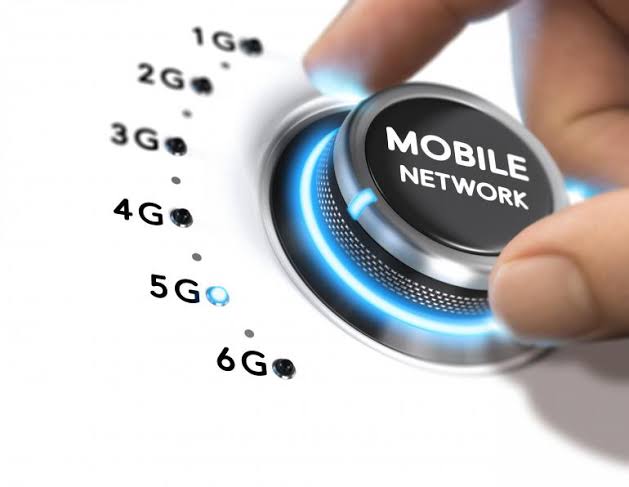
Many people ask, what are the major differences between 1G, 2G, 3G, 4G and 5G apart from the speed, well, there are many differences.
The previous generations of mobile networks are 1G, 2G, 3G, and 4G.
First generation
1G1980s: 1G delivered analog voice.
second Generation
2GEarly 1990s: 2G introduced digital voice (e.g. CDMA- Code Division Multiple Access).
Third Generation
3GEarly 2000s: 3G brought mobile data (e.g. CDMA2000).
Forth Generation
4G LTE2010s: 4G LTE ushered in the era of mobile broadband.
leads to 5g
1G, 2G, 3G, and 4G all led to 5G, which is designed to provide more connectivity than was ever available before.
5G is a unified, more capable air interface. It has been designed with an extended capacity to enable next-generation user experiences, empower new deployment models and deliver new services.
With high speeds, superior reliability and negligible latency, 5G will expand the mobile ecosystem into new realms. 5G will impact every industry, making safer transportation, remote healthcare, precision agriculture, digitized logistics — and more — a reality.Qualcomm’s 5G TimelineWhat is 5G? Discover Qualcomm’s 5G rollout timing.
How 5g affects us and the economy
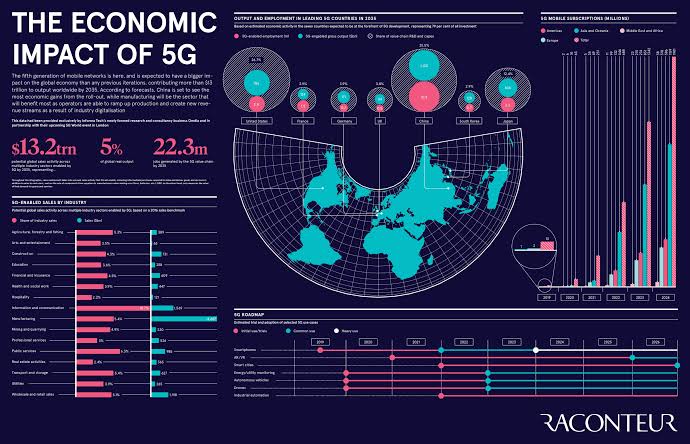
The key functional drivers of 5G will unlock a broad range of opportunities, including the optimization of service delivery, decision-making, and end-user experience. This will result in $13.2 trillion in global economic value by 2035, generating 22.3 million jobs in the 5G global value chain alone.
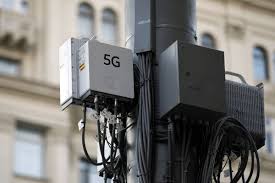
5G is designed to do a variety of things that can transform our lives, including giving us faster download speeds, low latency, and more capacity and connectivity for billions of devices—especially in the areas of virtual reality (VR), the IoT, and artificial intelligence (AI).
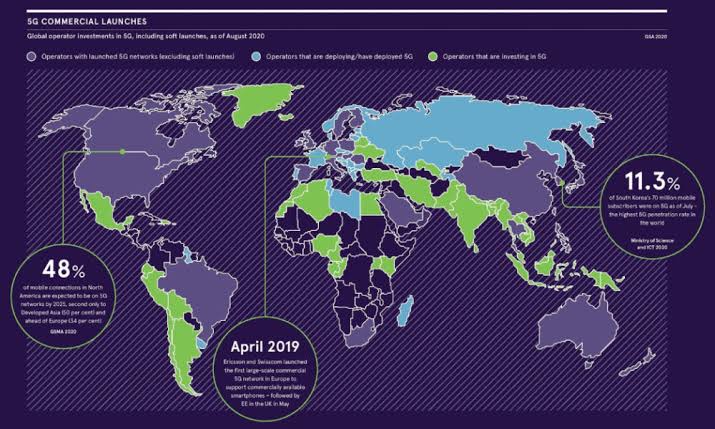
5G is being used in
South Korea, China, and the United States. They are the countries that lead the world in building and deploying 5G technology.
Advantages
- Easy communication
- Promotion of business via smartphone
- Connect with relative on social media
- Make money on smartphone
- Good for people’s safety
- Helps in emergency situation
- Todays phone is a fashion
Disadvantages
- It is a disturbing device
- Accident and health issues
- Bad effect on health
- Waste of time
- Privacy and security issues
 Nae Tech